
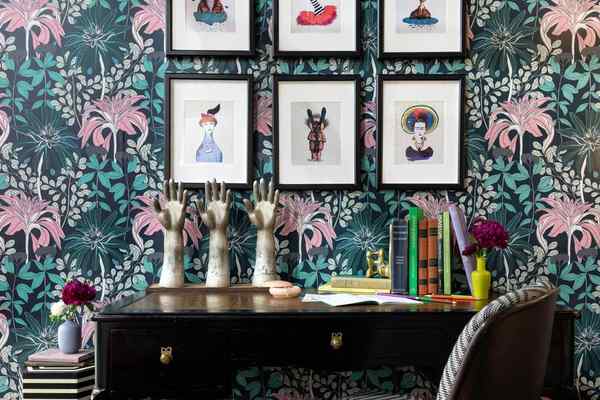
After years of pale palettes, empty surfaces, and the idea that calm must look sparse, interiors are moving in a more expressive direction. Design forecasts for 2026 increasingly point toward richer color, pattern, ornament, antiques, collections, and rooms that feel personal rather than perfectly edited for a photograph. The shift is not simply a return to “more is more.” The most convincing version is thoughtful maximalism: a layered approach in which abundance is guided by intention.
That distinction matters. A room can contain many colors, prints, objects, and references without feeling chaotic when those elements have relationships. Thoughtful maximalism decorating principles are less about filling every gap and more about creating rhythm, hierarchy, repetition, and meaning. The result feels collected over time rather than crowded all at once.
Start With a Point of View
Successful maximalist decorating usually begins with one clear idea. It might be a deep green dining room built around botanical art, a living room inspired by travel finds, or a bedroom where vintage florals and stripes share a warm, traditional mood. That point of view gives every later decision something to respond to.
Build a Palette Through Repetition
Maximalist rooms can use many colors, but repetition is what makes the palette readable. Let a few hues appear in different forms: a burgundy chair that connects to a smaller note in a rug, or blue ceramics that echo the color in patterned curtains.
Eclectic interior styling works best when colors are related rather than identical. A useful approach is to choose one dominant color family, one supporting family, and several accents. That leaves room for variety while giving the eye recognizable connections.
Layer Pattern by Changing Scale
Pattern mixing becomes easier when prints are not competing at the same scale. Pair a large floral with a medium stripe, then add a smaller geometric or dotted motif. The variation lets each pattern register without turning the room into visual static.
Distribute pattern across different surfaces, too. Wallpaper, upholstery, cushions, curtains, and rugs do not all need to make the same statement. If the walls are highly detailed, a quieter sofa can act as a pause. If the walls are simple, textiles can carry more of the energy.
Create a Clear Visual Hierarchy
A layered decor style still needs somewhere for the eye to land first. One element should usually carry more visual weight than the others: an oversized painting, a dramatic headboard, a patterned sofa, a bookcase filled with art and objects, or a richly colored wall.
Once that focal point is established, smaller pieces should support it rather than compete equally. This is one of the most useful thoughtful maximalism decorating principles because it separates deliberate abundance from clutter. When every object demands attention, the room can feel exhausting. When some elements lead and others support, complexity becomes easier to enjoy.
Turn Collections Into Storytelling
Books, ceramics, photographs, vintage glass, small artworks, and travel objects can all become part of a maximalist room. The key is to group them with enough logic that they read as a collection rather than scattered possessions.
Arrange similar objects together on one shelf, console, or wall. Vary heights, leave small gaps between groups, and mix functional pieces with sentimental ones. A collection becomes more powerful when it communicates something about the person who lives there.
Related ideas such as bohemian living room ideas, gallery wall styling, and mixing vintage and modern furniture fit naturally within this approach.
Use Texture to Add Depth Without Noise
Not every layer needs to be colorful. Velvet beside linen, polished wood against woven rattan, glossy ceramics near aged brass, or a thick wool rug beneath a smooth table can make a room feel richer without adding another print.
This is especially useful if you prefer a controlled palette. A room limited to olive, cream, rust, and brown can still feel abundant when finishes move between matte and reflective, soft and hard, old and new.
Keep Some Breathing Room
Thoughtful maximalism is not afraid of an empty patch of wall or a clear tabletop. Small areas of restraint make fuller areas feel stronger. Think of them as punctuation: without pauses, even an interesting sentence becomes difficult to read.
A simple editing trick is to photograph the room and look at the image rather than the space itself. If several zones feel equally busy, remove or relocate one or two pieces from the least important area. Editing does not weaken maximalism; it gives the remaining layers more impact.
A Practical Living-Room Example
Imagine a living room with a neutral sofa, a vintage rug, framed art, and several inherited ceramics. Instead of replacing everything, identify the strongest existing feature. If the rug contains rust, navy, and olive, use those colors as the connecting thread.
Add navy curtains, repeat rust in two cushions, and place the ceramics together on a shelf rather than across several surfaces. Introduce one larger artwork above the sofa as the focal point, then add one small-scale patterned cushion that relates to the rug without copying it. The room now contains more color, pattern, and objects, but each addition has a job. That is thoughtful maximalism in practice.
Know When to Stop
The finishing stage is often subtractive. Once the room feels full, remove a few items and see whether the design becomes clearer. If an object has no relationship to the palette, mood, function, or story, it may belong somewhere else.
Leaving a little capacity for future art, books, or finds also keeps the interior from feeling frozen. A collected home should have space for the next chapter.
Frequently Asked Questions
What is thoughtful maximalism?
Thoughtful maximalism is an intentional way of decorating with abundant color, pattern, art, objects, and texture while maintaining visual hierarchy and cohesion. It focuses on meaningful layering rather than simply filling a room.
How do you keep maximalist decor from looking cluttered?
Repeat colors, group collections, vary pattern scale, create a focal point, and leave some quieter areas. Regular editing also helps ensure that objects contribute to the room rather than compete for attention.
Can maximalism work in a small room?
Yes. Small spaces can handle rich color and pattern. Keep the number of focal points controlled and use walls and shelving for display so the floor plan remains functional.
Do maximalist interiors need bright colors?
No. Maximalism can use muted, earthy, or dark palettes. Layered textures, collections, contrasting materials, art, and pattern can create richness without vivid color.
Make Abundance Feel Personal
The appeal of thoughtful maximalism is not that it rejects minimalism simply to be louder. It offers a different definition of order, based on relationships, memory, repetition, and personality. By choosing a point of view, building color connections, varying pattern scale, creating hierarchy, and editing with purpose, a richly layered room can still feel calm and coherent.
The best maximalist homes do not look as though every item was bought to complete a trend. They feel lived in, slowly assembled, and specific to the people inside them. That sense of personal expression is what gives the style staying power beyond any single design season.