
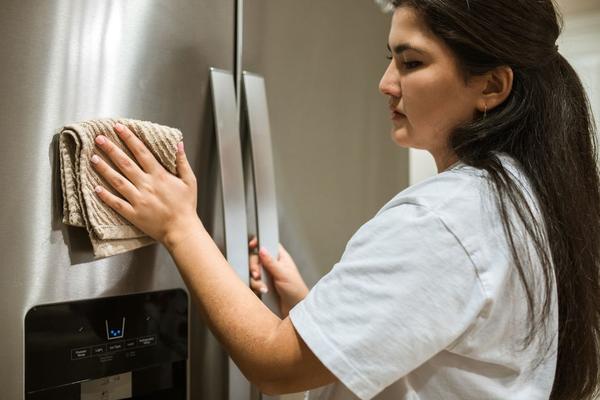
A stainless steel refrigerator can look spotless in the morning and covered in fingerprints by lunchtime. The frustrating part is that wiping it down often replaces the prints with cloudy patches or long streaks. The fix is usually less about buying a stronger cleaner and more about using the right cloth, following the metal’s grain, and drying the surface properly.
Here is how to clean stainless steel appliances without streaks, from an everyday refrigerator door to the front of a dishwasher or oven.
Check the Finish Before You Clean
Not every appliance that looks like stainless steel has the same surface. Traditional brushed stainless steel may tolerate an approved stainless steel cleaner or polish. Fingerprint-resistant stainless steel, black stainless steel, and other specialty finishes can have protective coatings that require gentler care. Some manufacturers specifically warn against using stainless steel polish, vinegar, or abrasive products on those coatings.
Check the appliance’s care instructions or model information before trying a new product. If you are unsure which finish you have, start with a little mild dish soap in warm water and a soft microfiber cloth, provided your manual permits it. Test an inconspicuous area first.
What You Need for a Streak-Free Clean
You rarely need a cupboard full of appliance cleaning supplies. Set aside two or three clean microfiber cloths, warm water, and a small amount of mild dish soap. Keep one cloth for washing, one for removing any remaining soap with clean water, and a completely dry cloth for the final buff.
For uncoated stainless steel with stubborn marks, a cleaner specifically approved by your appliance manufacturer may help. Avoid grabbing a random spray just because its label says it makes surfaces shine. The wrong formula can leave residue or damage a coated finish.
How to Clean Stainless Steel Appliances Step by Step
1. Find the Direction of the Grain
Look closely at the brushed lines on the surface, preferably under angled light. They usually run vertically or horizontally. Move your cloth parallel to those lines instead of scrubbing in circles. Wiping with the grain helps lift residue from the brushed texture and reduces the appearance of streaks.
2. Lift Loose Dirt Before Polishing
Use a clean, lightly damp microfiber cloth to remove dust, crumbs, and fresh splashes. On an oven or range, wait until the exterior is cool. For dried sauce near a handle, hold a damp cloth against the spot briefly to soften it rather than scraping it with your fingernail or a rough sponge.
3. Remove Grease and Fingerprints
Add a small drop of mild dish soap to warm water. Dampen the cleaning cloth; it should not be dripping. Wipe with gentle, overlapping strokes in the grain’s direction, paying attention to the area around refrigerator handles where skin oils collect. Use a separate cloth for plastic trim, touch controls, and display panels, following their own cleaning instructions.
4. Wipe Away Soap Residue
Soap removes grease, but leftover detergent can create the same haze you were trying to eliminate. Go over the cleaned metal with another microfiber cloth lightly dampened with plain water. Rinse or replace the cloth when it starts carrying suds. Do not flood seams, buttons, vents, or electrical controls.
5. Dry Immediately With a Fresh Cloth
This is the step that makes the biggest visible difference. Use a completely dry microfiber cloth and buff along the grain until the surface feels dry. Letting droplets evaporate can leave mineral spots, especially in areas with hard water. Inspect the appliance from the side, where remaining streaks are easier to see.
6. Use Polish Only When the Finish Allows It
If traditional stainless steel still looks dull after cleaning, consider a manufacturer-approved cleaner or polish. Apply the amount directed on the label, avoid adjacent plastic and rubber components, and buff away excess. Skip this step on fingerprint-resistant or coated finishes unless the manual explicitly recommends it. More product does not automatically mean more shine.
Why Stainless Steel Still Looks Streaky
Cloudy Film After Cleaning
A milky-looking patch often points to too much detergent, an oily polish, or cleaner that was not fully removed. Rewash a small area with mild soapy water, wipe with a clean damp cloth, then dry thoroughly. If it clears, repeat across the panel without adding more polish.
Water Spots and Drip Marks
Water spots commonly appear below a dispenser or along the bottom edge of a dishwasher door. Blot fresh drips as soon as you notice them. Do not automatically reach for vinegar: although it is sometimes recommended for bare steel, some appliance finishes prohibit acidic cleaners. Follow your model’s approved instructions for persistent mineral deposits.
Stainless Steel Fingerprints That Return Quickly
The usual culprit is repeated contact, not inadequate cleaning. Focus quick daily wipe-downs on handles and the strips of metal immediately beside them. For example, if children pull open the refrigerator by the door edge, clean that narrow contact zone instead of repolishing the entire door every evening.
Cleaning Mistakes That Can Damage the Finish
Avoid steel wool, abrasive pads, gritty powders, and aggressive scrubbing. These can scratch brushed surfaces or wear away protective coatings. Bleach and chlorine-containing products are also poor choices for stainless steel; ammonia, oven cleaners, window sprays, and acidic cleaners may be prohibited by the manufacturer. Even paper towels can be too abrasive for certain specialty finishes.
Another common mistake is spraying cleaner directly onto control panels or door seams. Apply approved products to the cloth when appropriate, and keep moisture away from openings. Never combine cleaning chemicals. If the surface already has deep scratches, ordinary cleaning will not erase them, and scratch-removal kits can make coated finishes worse.
Frequently Asked Questions
What is the best way to clean stainless steel without streaks?
Use a soft microfiber cloth with mild soapy water, wipe along the grain, remove any soap with a clean damp cloth, and dry immediately with a second dry microfiber cloth. Always check the manufacturer’s guidance for your particular finish.
Can I use vinegar on stainless steel appliances?
Only if your appliance’s instructions allow it. Some guidance permits vinegar on certain uncoated stainless steel surfaces, but manufacturers warn that it can damage fingerprint-resistant or specialty finishes. Mild soap and water is usually the safer starting point.
Why does my stainless steel look cloudy after polishing?
Excess polish or an incompatible product can leave a visible film. Remove residue using the cleaning method approved for your finish, then buff dry. Avoid adding another layer of polish until the cloudiness is gone.
Are microfiber cloths better than paper towels?
Clean, soft microfiber cloths are generally preferred because they lift residue and dry surfaces without abrasive scrubbing. Some appliance manufacturers specifically advise against paper towels on their finishes.
Keep the Shine Without Overcomplicating the Job
Streak-free stainless steel comes down to a consistent sequence: identify the finish, clean gently with the grain, remove residue, and dry thoroughly. Most fingerprint marks need no special treatment, and the best-looking result often comes from using less cleaner, not more. Once you know your appliance’s finish, a few minutes of careful care can make the whole kitchen look tidier.