
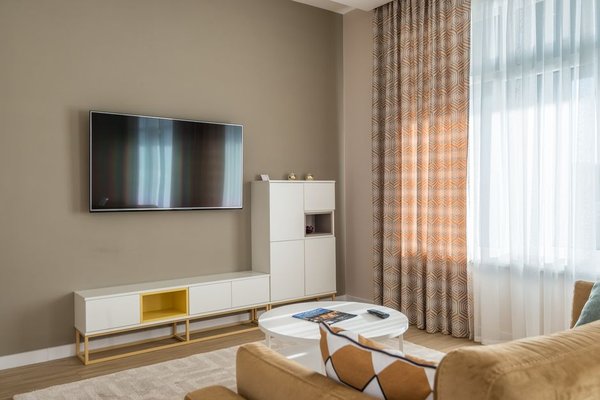
The best apartment living room ideas start with a simple question: what must this room do on an ordinary Tuesday? In many apartments, one space handles relaxing, entertaining, working, and sometimes dining. The challenge is not squeezing in more furniture. It is giving each activity enough room while keeping the apartment easy to live in—and easy to change when your needs or lease change.
Plan Around Movement Before Decorating
Start with a floor plan showing doors, windows, heating vents, outlets, and the path to adjoining rooms. Measure usable wall lengths and mark the direction each door opens. A furniture arrangement that looks balanced in a photo can feel awkward if you have to sidestep a coffee table every time you enter.
Protect the main walkway
Try to keep roughly 30 to 36 inches clear along the primary route when the room allows it. This is a practical planning target, not a universal building-code requirement. In a tight small apartment living room, prioritize an unobstructed path over symmetry. Keep exits, ventilation openings, and doors clear.
Choose Furniture That Feels Light and Works Hard
Apartment furniture needs to earn its footprint. That does not mean choosing the smallest sofa. A properly scaled sofa and a few useful supporting pieces often look calmer than several undersized chairs and tables scattered around the room.
Get the sofa dimensions right
Before buying, tape the sofa’s outline on the floor, including space to walk around its arms. Measure elevators, stairwells, hallways, and the apartment doorway as well. An apartment-size sofa with visible legs can create a lighter impression, but comfort and a workable delivery route matter more than a fashionable silhouette.
Build flexibility into smaller pieces
Nesting tables can separate for guests and tuck together afterward. A storage ottoman handles blankets and can serve as an occasional surface with a stable tray. One movable accent chair may offer more flexibility than a fixed loveseat. Choose pieces you can rearrange without dismantling the room.
Define Zones Without Building Visual Barriers
An open-plan apartment may need a lounge area and a work or dining spot. Give each zone a recognizable purpose without making the room feel chopped into boxes.
Use a rug to ground the seating
Choose a rug large enough for at least the front legs of the main seating to rest on it, if the layout permits. A tiny rug floating between the sofa and coffee table can make the seating feel disconnected. Low-pile options are often easier to move furniture across and maintain.
Layer the lighting
Overhead lighting alone can leave corners harsh or dim. Add a floor lamp near the sofa and a task light where you read or work. Plug-in fixtures avoid new wiring, which is useful in a rental apartment living room. Check cord placement so cables do not cross walking paths.
Make Storage Part of the Design
Clutter is especially noticeable when the living room is visible from the front door or kitchen. Give everyday items a destination close to where they are used, rather than relying on a big cleanup every weekend.
Mix open and closed storage
Closed cabinets conceal remotes, game controllers, paperwork, and charging accessories. Open shelves can display books or personal objects, but leave breathing room around them. A media console with doors often does more for a streamlined appearance than another decorative shelf. Explore small-space storage ideas for other organizing approaches.
Use vertical space carefully
A tall, narrow bookcase takes up less floor area than a wide low unit, but secure tall or top-heavy furniture against tipping according to the manufacturer’s instructions. In a rental, ask about permitted anchors and how to repair holes before installing anything. Freestanding pieces still need appropriate anti-tip protection where required.
Add Personality Without Permanent Changes
Compact apartment decor works best when color and texture have a clear role. Neutral walls are not mandatory, and pale paint does not magically increase square footage. What helps is visual rhythm: repeating a few colors, limiting competing finishes, and leaving some surfaces intentionally bare.
Repeat colors instead of matching everything
Pull an accent color from a rug, cushion, or print and repeat it in two other places. Mix smooth materials with woven or soft textures for depth. If the apartment has dark floors, a medium or light rug can separate the seating visually without forcing the room into white and beige.
Use reversible rental-friendly updates
Swap throw pillow covers, add curtains on approved hardware, or lean framed art on a console. Removable products are not automatically damage-free: test them in an inconspicuous spot, follow removal instructions, and confirm lease restrictions. Avoid blocking windows or interfering with existing blinds and safety features.
Renter-friendly wall decor offers further ways to personalize a room without planning a renovation.
A Practical Layout for a Common Apartment
Imagine a rectangular living room with a front door at one end, a window at the other, and an open kitchen along one side. Position a compact sofa against the longer uninterrupted wall. Across from it, use a shallow media console rather than deep shelving. Put a storage ottoman in the center and leave the route between the entry and kitchen clear.
Near the window, a slim desk can double as a side table when work is finished. Before ordering furniture, outline the sofa, console, and desk with painter’s tape and walk through the arrangement carrying a laundry basket. If the route feels cramped, move or remove a piece while changes cost nothing.
Leave Some Space Unfilled
Before adding another chair or side table, review small living room layouts and ask whether an open patch of floor would make daily movement easier. Empty space can be functional.
Frequently Asked Questions
How can I make a small apartment living room look bigger?
Keep the main walkway open, reduce unnecessary furniture, and use coordinated finishes. Appropriate rug sizing, visible floor around furniture, and layered lighting can make the layout feel more coherent without changing the room’s dimensions.
Should apartment living room furniture go against the walls?
Not always. In a very small room, a wall-side sofa can preserve circulation. In a wider room, floating the sofa slightly away from the wall may create a more natural conversation zone. Let doors and traffic patterns guide the decision.
What storage works best in a rental living room?
Try a cabinet-style media console, an ottoman with storage, and appropriately secured shelving. Choose movable furniture where possible, and check lease rules before attaching anything to walls.
How can I decorate without losing my security deposit?
Favor textiles, freestanding lighting, and easily moved accessories. Get permission for drilling or adhesive products where required, document the room’s original condition, and follow the lease’s restoration terms.
Make the Room Fit Your Life
A successful apartment living room is not the one with the most clever products. It is the one that makes everyday routines effortless, stores what you use, and leaves space to breathe. Start with circulation, choose flexible furniture, and add personality in reversible layers. As your needs change, the room can change with them.