
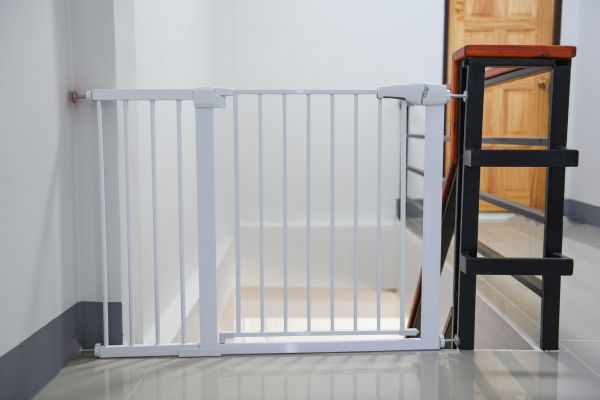
A staircase changes the mood of a home the moment a baby starts crawling. What used to be a simple passage between floors suddenly becomes a place that needs real attention. Parents begin noticing every edge, gap, landing, and awkward turn. That is why choosing the Best child safety gates for stairs is not just another baby-product decision. It is part of creating a home where a child can explore without every movement feeling like a small emergency.
In 2026, child safety gates are more varied than ever. Some are built for wide openings, some for narrow staircases, some for banisters, and some for homes where drilling into woodwork is a sensitive topic. But when stairs are involved, the conversation becomes more serious. A gate for a hallway is not always safe enough for the top of a staircase. The right choice depends on strength, installation style, latch design, height, spacing, and how naturally adults can use it every single day.
Why Stair Safety Gates Deserve Extra Care
A baby gate is often treated like a simple barrier, but stairs demand more than a basic divider. Children grow quickly. One month they are crawling slowly across the floor, and the next they are pulling themselves up, pushing objects, testing latches, and copying adults with surprising confidence.
The best safety gate for stairs should feel secure, not temporary. It should stay firmly in place when pushed, pulled, leaned on, or bumped during a busy morning. It should also be easy enough for adults to open and close without frustration, because a gate that becomes annoying is a gate people may forget to latch properly.
That small human detail matters. Parents often carry laundry, bags, toys, or a half-asleep toddler while moving through the house. If a gate requires two hands, catches at the bottom, or swings awkwardly, it can become part of the problem instead of part of the solution.
Hardware-Mounted Gates Are the Safer Choice for Stairs
For the top of stairs, hardware-mounted gates are usually considered the safest option. These gates are fixed into the wall, door frame, or banister using screws and brackets. That makes them much more stable than pressure-mounted gates, which rely on tension between two surfaces.
Pressure-mounted gates can work well in certain areas, such as doorways, hallways, or sometimes the bottom of stairs. But at the top of a staircase, the risk is different. If a pressure gate shifts or comes loose, a child could fall with the gate. That is why a stair gate should be chosen with the staircase location in mind, not just the width of the opening.
A good hardware-mounted stair gate may take more time to install, but that extra effort is often worth it. Once fitted correctly, it feels like a reliable part of the home rather than a movable accessory.
What Makes a Stair Gate Truly Practical
Safety is the first priority, but daily usability matters too. The best child safety gates for stairs usually combine a strong frame with a latch adults can operate smoothly. A one-handed opening system is helpful, especially when parents are carrying a child. At the same time, the latch should be difficult enough that a toddler cannot figure it out after watching a few times.
A stair gate should also swing in a safe direction. At the top of stairs, many parents prefer a gate that does not swing out over the steps. A gate with a controlled swing or stop mechanism can make the movement feel more natural and less risky.
Another detail that deserves attention is the threshold. Some gates have a bar along the floor, which may be fine for doorways but less ideal near stairs. A raised bar can become a trip hazard, particularly when someone is walking through quickly or carrying something heavy. For stair areas, a clean walk-through design is often more comfortable and safer for everyday use.
Measuring the Stair Opening Correctly
Before choosing any gate, accurate measurement is essential. Stair openings are not always as straightforward as they look. One side may be a wall while the other is a banister. The top landing may be wider than the stair opening itself. Older homes may have uneven trim, angled posts, or baseboards that affect how brackets sit.
Measure the opening at more than one height because the width can vary from top to bottom. It is also worth checking the surfaces where the gate will attach. Drywall alone may not provide enough strength unless proper anchors or studs are used. Banisters may require special mounting kits so the gate can be secured without damaging the wood.
This is where many installation problems begin. A gate may be safe in design but unsafe in practice if it is fitted poorly. The best gate is the one that matches the actual staircase, not just the one that looks best online.
Materials and Build Quality Matter
Child safety gates are commonly made from metal, wood, mesh, or a mix of materials. Metal gates often feel sturdy and are popular for busy stair areas. Wood gates can blend nicely with traditional interiors, though they still need strong hardware and smooth edges. Mesh or retractable styles can be convenient in some spaces, but they require careful selection because not every flexible design is appropriate for every stair setting.
The build should feel solid. There should be no sharp edges, large openings, loose parts, or areas where small fingers could easily get trapped. Vertical bars are generally preferred over designs that might give a child a foothold. A gate that invites climbing is not doing its job well.
Parents should also look for clear safety labeling and age or use guidance. A gate designed for pets, for example, is not automatically suitable for children. The purpose of the product matters.
Gates for the Top and Bottom of Stairs
Many homes need two different gates: one at the top and one at the bottom. The top gate should be treated as the more critical installation because of the fall risk. This is where a hardware-mounted gate with a secure latch and no awkward floor bar makes the most sense.
At the bottom of stairs, there may be slightly more flexibility depending on the layout. Some families use pressure-mounted gates there, especially if the gate is blocking access rather than preventing a fall from height. Still, stability matters. Children may pull on the gate, shake it, or use it to stand. If it moves easily, it is not reliable enough.
The bottom gate also helps stop climbing before it starts. Once toddlers discover stairs, they may return to them again and again. A lower gate can reduce that temptation and give parents more control over when stair practice happens.
Common Mistakes Parents Should Avoid
One common mistake is using the wrong type of gate in the wrong place. A gate that works perfectly in a kitchen doorway may not be suitable for the top of stairs. Another mistake is installing a gate too late. Many parents wait until a child is already crawling quickly or pulling up, but safety preparation is easier before mobility becomes unpredictable.
Loose installation is another concern. A gate should not wobble, slide, or depend on furniture for support. It should be checked regularly because daily use can loosen screws, brackets, or adjustment points over time.
Parents should also avoid older accordion-style gates or secondhand gates with missing hardware, unclear labels, or worn locking parts. A used gate may look fine, but if the latch is weak or the mounting kit is incomplete, it may not offer dependable protection.
Choosing a Gate That Fits Real Family Life
The best stair gate is not always the most expensive or the most stylish. It is the one that fits the home, installs securely, and works smoothly enough that adults use it correctly every time. A beautiful gate that is difficult to close is not a good choice. A strong gate that blocks the hallway awkwardly may become frustrating. Practical safety has to fit daily movement.
Families should think about who uses the stairs most often. Grandparents, older siblings, babysitters, and guests may all need to operate the gate. If the latch is confusing, people may leave it open. A gate should be child-resistant, not adult-resistant.
It also helps to think ahead. A baby who is crawling today may be climbing tomorrow. A gate chosen for short-term convenience may not feel right once the child becomes stronger and more curious.
Conclusion
Finding the Best child safety gates for stairs in 2026 is really about matching safety guidance with the reality of your own home. A strong hardware-mounted gate at the top of the stairs, careful measurement, secure installation, and a latch that adults can use easily all make a noticeable difference. The right gate does not call attention to itself every day. It simply works, quietly and reliably, while your child grows more confident in the space around them.
Stairs will always need supervision, and no gate can replace an attentive adult. But a well-chosen stair gate gives families an important layer of protection. It turns a risky area into a more controlled part of the home, letting children explore their world with a little more freedom and parents breathe a little easier.